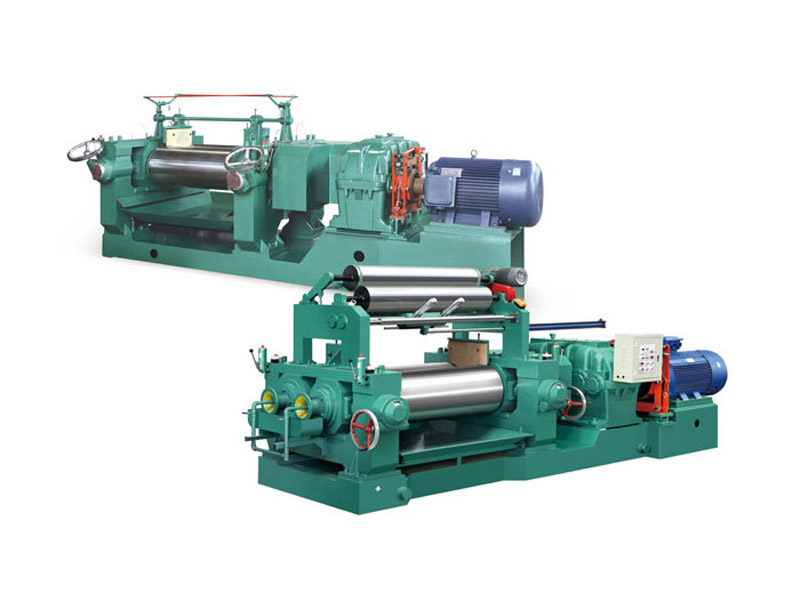
In the sportswear and casual footwear manufacturing industry, lightweight, highly elastic, and durable EVA foam rubber soles have become a key indicator of product quality. Behind this outstanding performance lies a critical piece of equipment—the tilting internal mixer. This article will delve into the core value of this machine and explore why footwear material manufacturers worldwide are increasingly turning to internal mixers made in China.
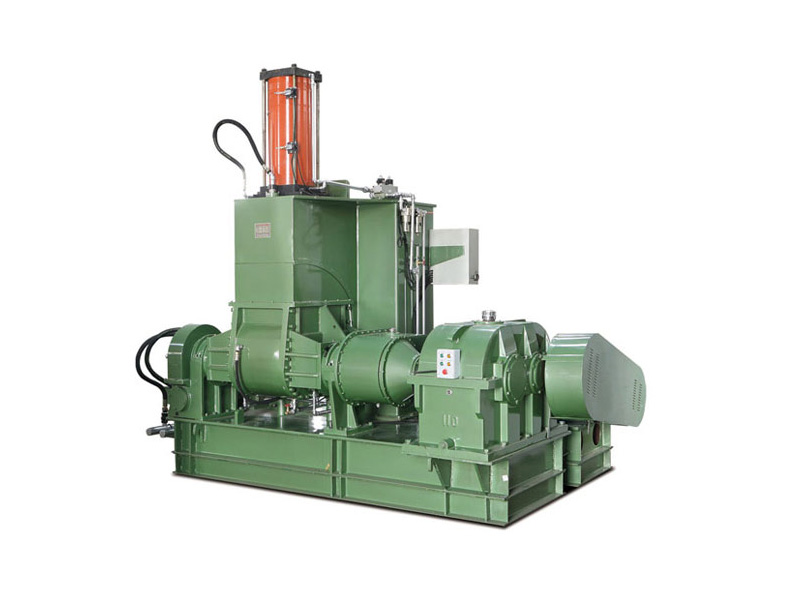
An internal mixer, fully known as an enclosed rubber mixing machine, is the core equipment for mixing polymer materials such as rubber and plastic. Its working principle involves applying intense shearing, squeezing, and stretching forces to materials through a pair of counter-rotating rotors within a sealed mixing chamber. This ensures nano-level uniform dispersion of various additives (such as foaming agents, cross-linking agents, and fillers) into the base material.
The tilting internal mixer is an upgraded version of the conventional internal mixer. Its most significant feature is the mixing chamber’s ability to tilt forward by 110° to 140°, achieving “zero-residue” discharge. This design not only improves production efficiency but also ensures batch-to-batch consistency, making it an ideal choice for modern continuous production.
The manufacturing process of EVA foam soles is highly complex, demanding strict uniformity in mixing and precise temperature control. Rubber internal mixers offer irreplaceable advantages in this process:
Precise Temperature Control: EVA material is extremely temperature-sensitive. Overheating can lead to premature cross-linking (scorching), while insufficient temperature prevents uniform foaming. The advanced temperature control system of the internal mixer ensures mixing occurs within the optimal temperature range.
High Shear Dispersion Capability: To achieve fine and uniform cell structure, foaming agents and additives must be highly dispersed. The powerful shear force generated by the mixer’s rotors effectively breaks up agglomerates, ensuring every gram of material has the same foaming potential.
High Efficiency and Energy Saving: Compared to open mills, internal mixers operate in a sealed environment, reducing mixing time by 30%-50% and significantly lowering energy consumption and labor costs.
In the global rubber machinery sector, “Made in China” has evolved from a low-cost label to a symbol of high cost-performance and reliable technology. Choosing an internal mixer factory in China is driven by the following factors:
Mature Industrial Chain and Scale Effect: China boasts the world’s most complete rubber machinery industrial chain, from castings to control systems. Large-scale production offers significant price advantages and short delivery times.
Technological Innovation Aligned with International Standards: Leading Chinese internal mixer factories now commonly adopt European design standards, with high-precision manufacturing of core components such as rotors, gearboxes, and temperature control systems. Many factories hold international certifications like CE and ISO, with equipment performance reaching advanced global levels.
Comprehensive After-Sales Service: Chinese equipment manufacturers are increasingly prioritizing overseas market services, offering remote diagnostics, rapid spare parts supply, and professional installation and commissioning guidance, significantly reducing operational challenges for international clients.
The tilting internal mixer enhances the final quality of EVA soles across multiple dimensions through its unique structure and process control:
Enhanced Resilience: By uniformly dispersing cross-linking agents, a more stable and uniform three-dimensional network structure is formed. When the sole is under stress, the molecular chains quickly return to their original state, increasing resilience by 10%-15%.
Precise Density Control: The tilting internal mixer achieves “pre-dispersion” uniformity of the foaming agent in the base material, preventing uneven bubbles caused by local agglomeration. This allows precise control of sole density, enabling lightweight design.
Improved Wear Resistance: High-shear mixing achieves nano-level dispersion of reinforcing fillers (such as silica), significantly enhancing the sole’s wear resistance and extending the product’s lifespan.
Batch Stability: The tilting discharge structure completely eliminates material residue caused by “bridging” in traditional equipment, ensuring consistent formula composition across batches with an error rate below 1%.
In the production chain of EVA soles, the mixing stage is the “genetic engineering” that determines the final product’s performance. If issues occur during mixing, subsequent processes like open milling, granulation, and foam molding cannot compensate. Therefore, the tilting internal mixer is not just a piece of equipment—it is the starting point of quality.
By adopting a tilting internal mixer, manufacturers can:
Achieve full process traceability from raw materials to finished products;
Meet the stringent environmental and physical performance standards of international brands;
Enhance production line automation, reduce manual intervention, and lower defect rates.
In summary, with its excellent mixing efficiency, precise temperature control, innovative tilting discharge structure, and strong automation adaptability, the tilting internal mixer has become an indispensable core asset in EVA foam rubber sole production lines. For footwear material companies pursuing superior quality and efficient production, choosing a tilting internal mixer manufactured by a specialized Chinese factory is not just about acquiring a machine—it is about securing stability, reliability, and lasting competitiveness.